22 July 2026
How to build a fair, unbiased CV screening process
CV screening is usually the first stage where a good candidate gets cut for reasons that have nothing to do with the job. Not because whoever is recruiting means any harm. It's that screening, squeezed between meetings and ten other tasks, tends to lean on mental shortcuts. Those shortcuts have a name: bias.
The most common biases in a quick screen
Some show up without anyone noticing.
Similarity bias. Recruiters tend to rate candidates higher when they studied at the same university, worked at the same previous company, or share interests listed on the CV. It makes sense on a human level, we like what feels familiar, but it has no bearing on job performance.
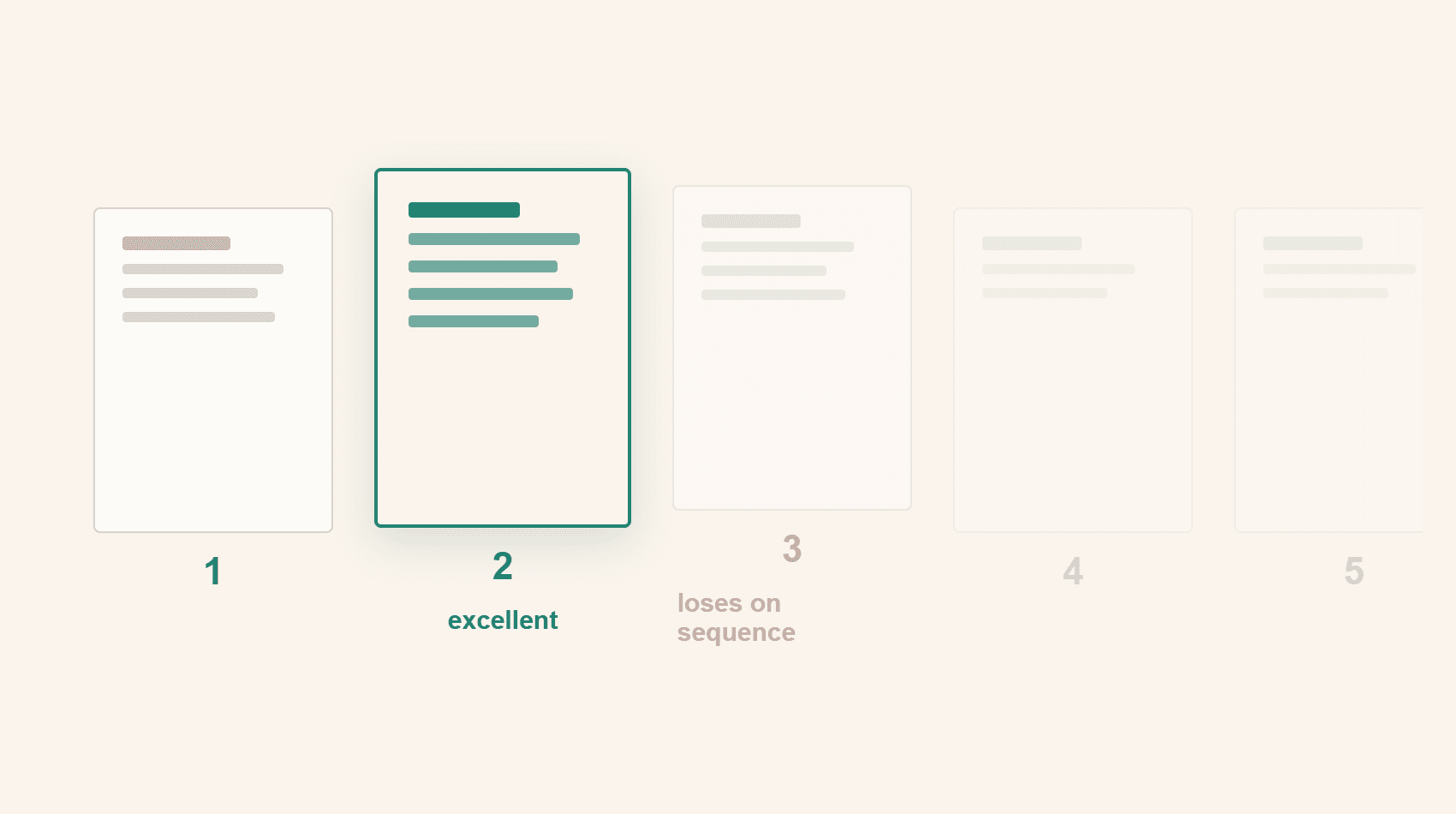
First CV bias. The first resume in a batch quietly sets the bar for the ones that follow. If it's exceptional, the next ones look weaker by comparison even when they're perfectly suitable.
Name and background bias. Studies going back decades show the same CV, with different names attached, gets different response rates. Nobody does this on purpose. It happens because the brain links names to stereotypes, and that link forms before there's time to think it through.
Employment gap bias. A six month gap on a CV gets read as a red flag automatically, with no one asking why. It could be parental leave, an illness, caring for a family member. Or it could be nothing worth flagging at all.
Confirmation bias. Once a first impression forms, good or bad, the rest of the CV gets scanned for evidence that confirms it, and anything that contradicts it gets ignored.
What actually helps, in practice
No complex system is needed. Changing three or four concrete habits helps more.
1. Set the criteria before opening the first CV
It sounds obvious, but most screening starts without a written list of what actually matters for the role. If the criteria only live in the recruiter's head, they'll shift from CV to CV depending on mood and whatever came before. Write it down first: which skills are required, which experience is preferred but not a dealbreaker, and what's irrelevant even if it shows up on the CV (university, hobbies, photo).
2. Use a scoring grid, not a general impression
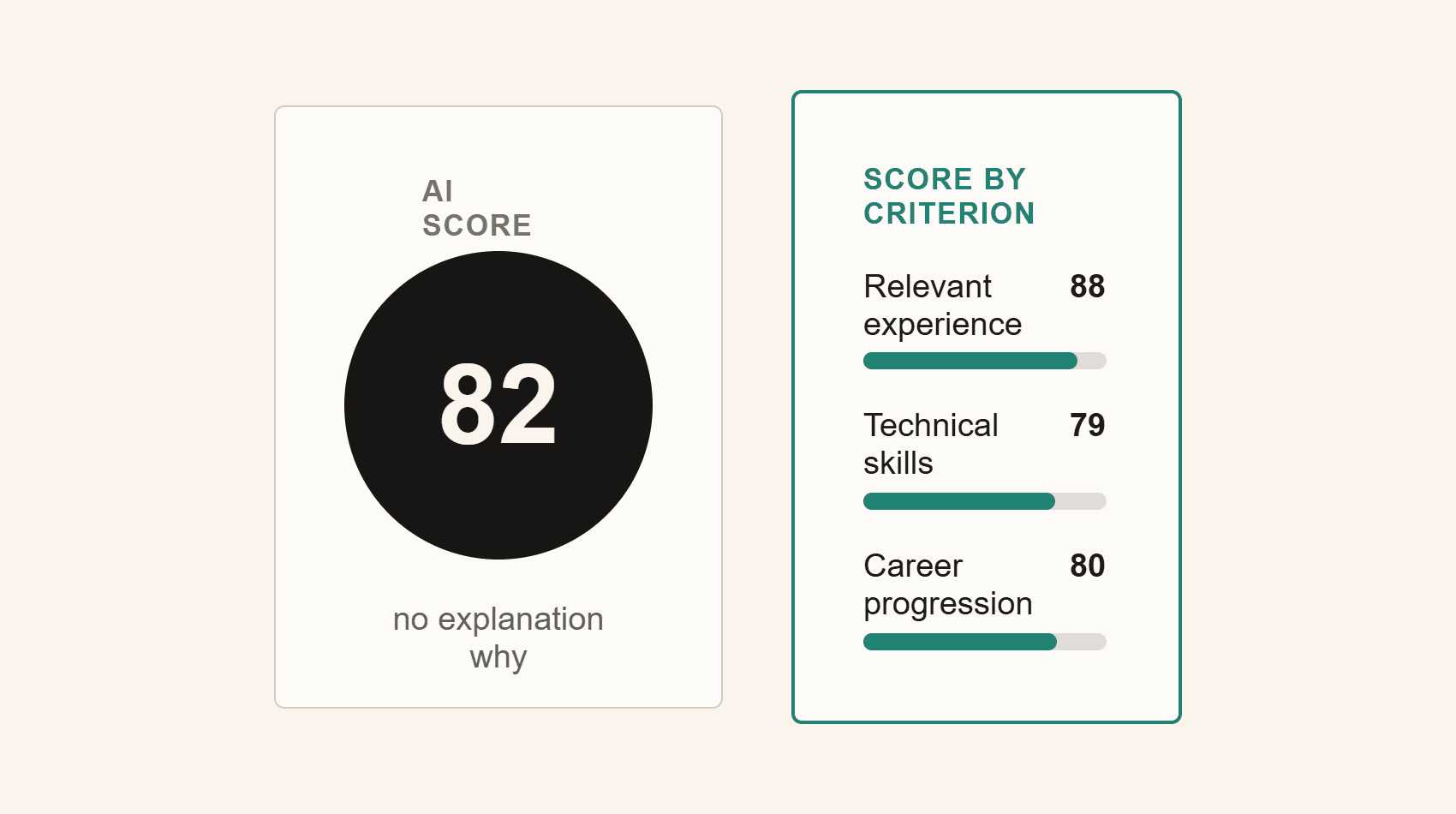
Instead of "I liked it" or "I didn't", score each criterion on its own using a simple scale (1 to 3, for example). This forces the decision to be justified criterion by criterion, instead of a single overall impression that's easy to rationalize after the fact.
3. Strip out information that shouldn't weigh on the decision
Name, photo, age, exact address, university, whenever the role doesn't require a specific degree. Not because that information is forbidden, but because it adds nothing to the real question: can this person do the job? Many recruitment platforms already let you hide these fields on a first pass.
4. Evaluate several CVs side by side, not one after another
Reading five CVs in a row and scoring each one before moving to the next reduces the comparison effect with whatever came right before it. It helps even more to score the same criterion across all five CVs before moving to the next criterion, for example scoring "relevant experience" across all five first, instead of evaluating one whole CV at a time.
5. Have a second person review the borderline cases
There's no need to duplicate the whole process. But the CVs sitting right on the line between advancing and not advancing are exactly the ones that benefit most from a second look, ideally from someone who hasn't seen the previous CV or the first impression it made.
Where AI helps, and where it doesn't
A well configured AI tool can apply the same scoring grid to a hundred CVs with the same consistency on the first one and the hundredth, without fatigue and without the sequential comparison effect. That's a real advantage: the problem of CV number 47 getting read worse just because it followed an excellent one disappears.
But AI also learns from the data it was trained on, and that data can carry the same historical patterns you're trying to remove. That's why any automated screening tool should let you see why it scored a CV a certain way, not just hand back a number. Without that transparency, you're just moving the bias somewhere else, not removing it.
At Parthumanally that's the logic we follow: criteria defined before screening starts, scores that come with an explanation per criterion, and human review always available for the borderline cases. AI speeds up the repetitive part; the final call still belongs to whoever is recruiting.
The short version
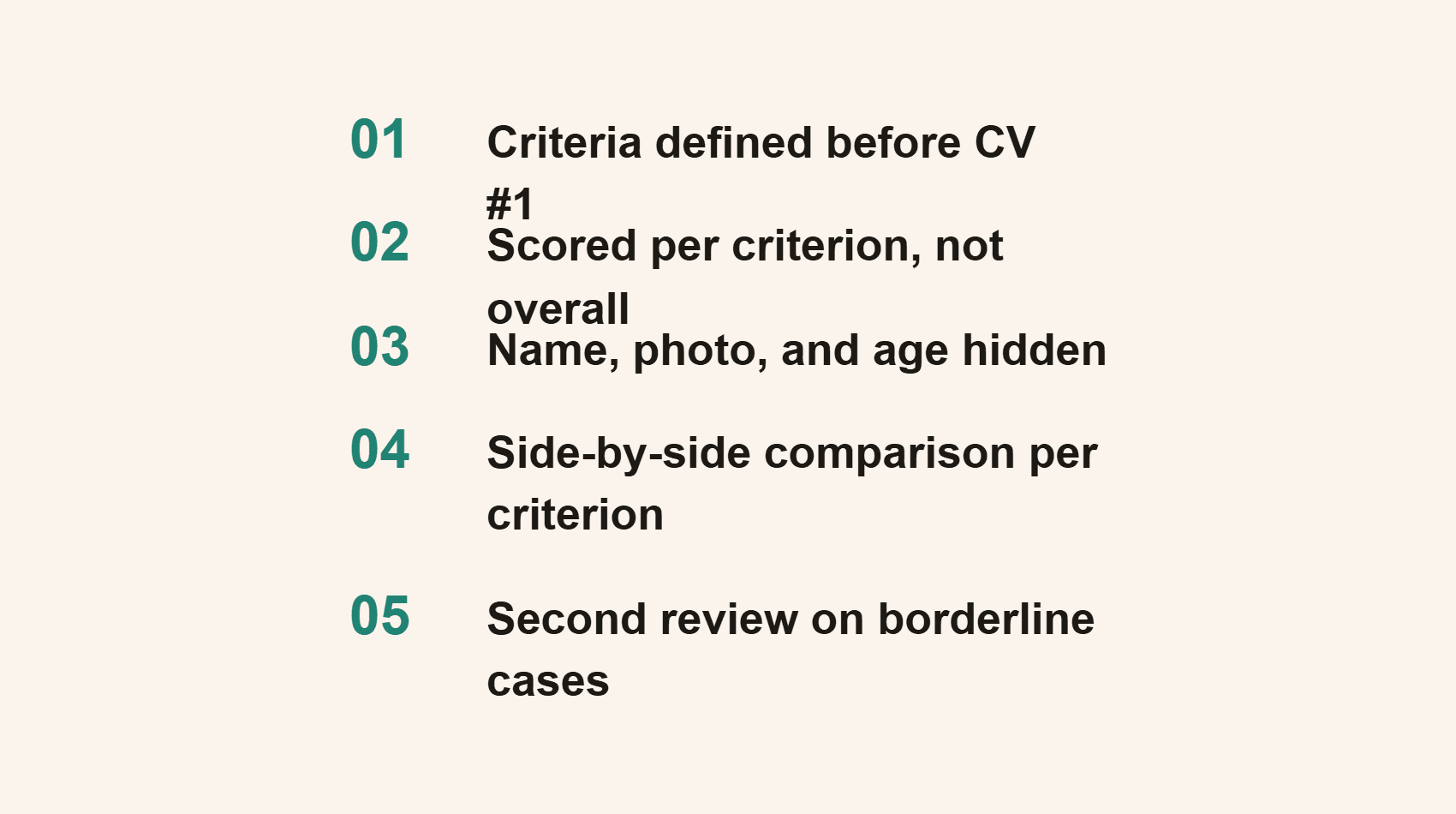
None of this requires budget or a new tool. Writing the criteria down first, scoring by criterion instead of overall impression, hiding irrelevant information, and having borderline cases reviewed by two people already removes a good chunk of the bias that creeps in unnoticed. AI can help apply this more consistently, as long as it's built with that transparency in mind.
Want to see this in your own screening process?
Parthumanally applies this logic to CV screening. Open the demo and see what a ranked shortlist looks like, on fictional candidate data.
See a demo